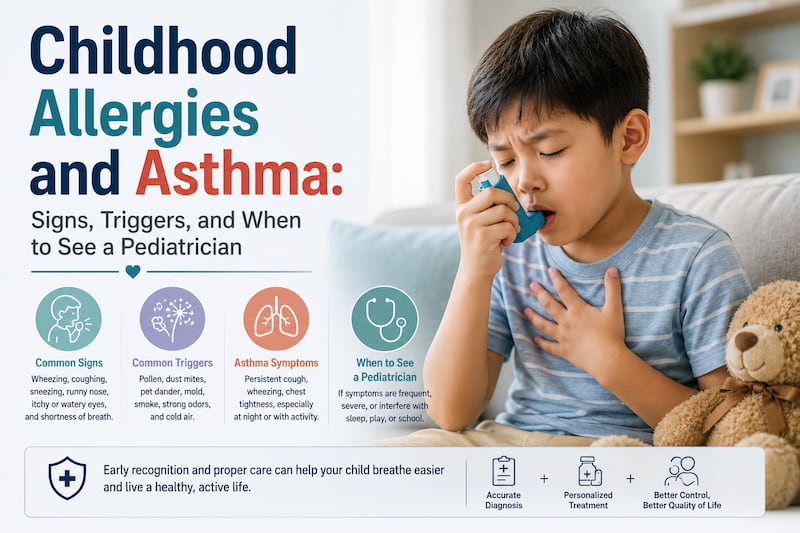
Allergies and asthma are two of the most common chronic conditions of childhood, and they often travel together. For parents, the challenge is that their signs — coughing, congestion, itchy eyes, wheezing — overlap with ordinary colds, which makes it easy to under-recognize a pattern that deserves attention. Understanding what to watch for helps you get your child the right care and keeps small problems from turning into missed school days and sleepless nights.
Recognizing Allergies in Children
Allergic reactions happen when the immune system overreacts to a normally harmless substance. In kids, the classic signs are sneezing, a runny or stuffy nose, itchy or watery eyes, and an itchy throat. A helpful clue that it’s allergies rather than a cold: symptoms that last for weeks, recur at the same time each year, or flare in specific settings — around pets, dust, or outdoors during pollen season. Colds also tend to bring fever and body aches, which allergies do not.
Recognizing Asthma
Asthma is inflammation and narrowing of the airways that makes breathing harder. In children it often shows up as a persistent cough — especially at night or with exercise, laughter, or cold air — along with wheezing, chest tightness, or shortness of breath. Some children mainly cough and never wheeze dramatically, which is why asthma is sometimes missed. A cough that keeps returning, disrupts sleep, or worsens with activity is worth discussing with your pediatrician.
Common Triggers — Including Local Ones
Triggers vary from child to child but commonly include pollen, dust mites, pet dander, mold, and respiratory infections. Families in the Treasure Valley face some regional factors worth knowing: high-desert seasonal pollen, dry air, and summer wildfire smoke can all aggravate both allergies and asthma, while cold winter air is a frequent asthma trigger. Identifying your child’s specific triggers is a key part of keeping symptoms under control.
How These Conditions Are Managed
The good news is that both allergies and asthma are highly manageable. Management usually combines avoiding known triggers, using medications appropriately — such as antihistamines for allergies or controller and rescue inhalers for asthma — and having a clear plan for what to do when symptoms flare. With a solid plan, most children lead fully active lives, play sports, and sleep well. The aim isn’t just to treat flare-ups but to prevent them.
When to See a Pediatrician
It’s time for an evaluation when symptoms are frequent, interfere with sleep, activity, or school, don’t respond to over-the-counter measures, or follow a clear seasonal or situational pattern. Any breathing difficulty, rapid breathing, or a rescue inhaler that isn’t providing relief warrants prompt attention. Experienced Meridian Idaho pediatricians can distinguish allergies from asthma from ordinary colds, identify triggers, and build a management plan tailored to your child — including an asthma action plan when needed.
Breathing Easy
Allergies and asthma are common, but they don’t have to control your child’s life. Watch for patterns rather than one-off symptoms, note what seems to trigger flares, and partner with a pediatrician who can turn guesswork into a clear plan. With the right approach, most kids breathe easier — literally — and get back to being kids.
Did you find this helpful? Check out our other helpful articles on our website.
Read Also
- Top Trends Shaping the Future of Mental Health Care
 Mental health care is moving fast to meet daily human needs. People want direct care that fits modern life. Clinics respond by creating flexible options that make healing easier to reach. Providers look past rigid habits to give people solid care. From smart tools to body wellness, these changes help people find relief when life… Read more: Top Trends Shaping the Future of Mental Health Care
 - Full-Arch Dental Tourism: Why UK Patients With Severe Bone Loss Are Looking AbroadDental implants have become one of the fastest-growing segments of private dentistry. Within that market, one patient group behaves very differently from the rest: people who have been told they do not have enough upper jawbone for conventional implants. For these patients, the choice is rarely between one clinic and another. It is between a… Read more: Full-Arch Dental Tourism: Why UK Patients With Severe Bone Loss Are Looking Abroad
- Levels of Mental Health Care and When to Seek SupportMental health care can range from occasional outpatient appointments to 24-hour hospital treatment. The appropriate level depends on safety, symptom severity, daily functioning, medical needs, available support, treatment history and personal preferences. A licensed clinician should assess these factors rather than relying on a symptom list alone. Need help now? In the United States, call… Read more: Levels of Mental Health Care and When to Seek Support
- How to Choose a Shilajit Brand Based on the ResearchIn a randomized trial published in the Journal of the International Society of Sports Nutrition in 2019, 63 active men took 250 mg of standardized shilajit, 500 mg, or a placebo every day for eight weeks, and the benefit for strength retention after a fatiguing workout appeared only at 500 mg. For anyone choosing a… Read more: How to Choose a Shilajit Brand Based on the Research
- How to Incorporate Relaxation into Your Busy ScheduleFinding balance when you have a packed daily agenda often feels out of reach. Between work duties, family obligations, and personal projects, personal rest usually gets pushed to the bottom of the list. Small, intentional shifts in daily habits can help restore calm without requiring hours of extra free time. Continue reading to discover everything… Read more: How to Incorporate Relaxation into Your Busy Schedule
- Red Light Therapy for Skin and Wellness: Meet Vital Red Light TherapyModern wellness is not always about complicated treatments or long routines. Many people are now looking for simple, convenient ways to support their skin, recovery, and overall wellness at home. One technology getting more attention is red light therapy. Red light therapy uses specific wavelengths of red and near-infrared light to support the body’s natural… Read more: Red Light Therapy for Skin and Wellness: Meet Vital Red Light Therapy
- Managing Shock Loss After a Hair Transplant: The Financial and Clinical Imperative of Post-Op CareIn the rapidly evolving landscape of private healthcare, executive leadership within cosmetic and restorative surgery clinics faces a dual challenge: maintaining strict clinical standards while maximizing patient lifetime value (LTV) and brand advocacy. As the global medical tourism and elective procedure markets expand, clinical outcome quality alone is no longer the sole differentiator for premium… Read more: Managing Shock Loss After a Hair Transplant: The Financial and Clinical Imperative of Post-Op Care
- Transform Your Skin Health: Premier Gluta IV Therapy in DubaiThis comprehensive guide explores how modern intravenous wellness treatments can help revitalize your complexion, boost immune function, and support overall cellular health. By incorporating modern IV therapy Dubai services into a routine health regimen, individuals can achieve direct nutrient absorption for optimal results. Selecting a customized gluta IV drip Dubai treatment provides targeted antioxidant defense,… Read more: Transform Your Skin Health: Premier Gluta IV Therapy in Dubai